In the heart of East Java, Indonesia, where the earth whispers ancient secrets and the sky dances with fire, lies Mount Bromo—a place where travelers don’t just witness sunrise; they stand at the threshold of eternity. Known among adventurers as the "Gateway to Earth," this active volcano offers a spectacle so surreal, so hauntingly beautiful, that it feels less like a dawn and more like an apocalypse painted in gold and shadow.
The journey begins long before the first light kisses the horizon. In the chilling darkness of early morning, visitors embark on a pilgrimage—a trek through the vast Sea of Sand, an ashen desert that stretches beneath the star-dusted sky. The air is thin and crisp, carrying the faint scent of sulfur, a reminder of the volcano’s restless spirit. Wrapped in layers against the cold, travelers climb to viewpoints like Penanjakan or King Kong Hill, their footsteps echoing in the silence, hearts beating with anticipation.
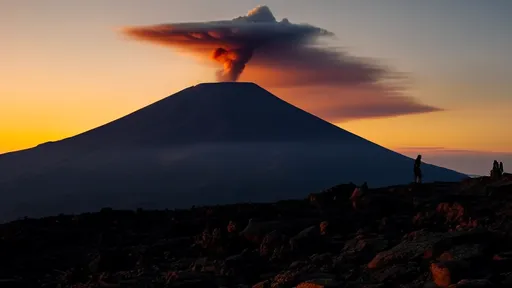
As the world holds its breath, the first hints of light emerge—a soft, ethereal glow that bleeds from the edge of the earth, illuminating the jagged silhouette of the Tengger caldera. Bathed in hues of indigo and violet, the landscape awakens: the majestic Mount Semeru, Java’s highest peak, puffs plumes of smoke into the sky, while Bromo itself smolders quietly, its crater a gaping maw into the planet’s fiery core.
Then, it happens—the sun erupts over the horizon, not with gentle warmth, but with a violent, breathtaking radiance. Rays of gold and crimson slash through the mist, casting long shadows across the barren terrain. The sky transforms into a canvas of fire: oranges blend with deep purples, and clouds catch light like embers scattered by some divine hand. In this moment, the world feels both immense and intimate; it is as if you are standing at the edge of creation, watching the dawn of time—or perhaps, its end.
This is the "apocalyptic sunrise"—a term coined not for destruction, but for the raw, untamed beauty that evokes a sense of both awe and humility. The light spills over the Sea of Sand, highlighting every ripple and curve, while the smoky tendrils from Semeru catch the sun’s rays, creating a dramatic, almost theatrical display. For those who have made the journey, it is a spiritual experience: a reminder of nature’s power, its fragility, and its timeless grandeur.
But Bromo is more than a visual marvel; it is a cultural touchstone. The Tenggerese people, who inhabit these highlands, revere the volcano as a sacred entity. Each year, they perform the Yadnya Kasada ceremony, offering prayers, flowers, and sacrifices to the gods, seeking blessings and protection from the mountain’s volatile nature. To witness the sunrise here is to step into a narrative woven with myth and devotion—a story where humans and nature coexist in a delicate, profound balance.
As the sun climbs higher, the landscape shifts once more. The dramatic colors soften, revealing the stark beauty of the terrain: the gray expanse of the sand sea, the lush green valleys clinging to the slopes, and the relentless energy of Bromo, which continues to rumble and spew ash as it has for centuries. Visitors often descend to the crater’s edge, trekking across the desert or riding horseback, to peer into the steaming, sulfurous depths—a humbling encounter with the planet’s inner workings.
Leaving Bromo is never easy. The memory of that sunrise—a fusion of light, shadow, and emotion—lingers long after the journey ends. It is a place that defies description, where words fall short and only the soul can truly comprehend what it has witnessed. For in that moment, at the Gateway to Earth, you don’t just see a sunrise; you feel the heartbeat of the world, raw and magnificent and utterly unforgettable.
Whether you are a seeker of adventure, a lover of nature, or a wanderer in search of meaning, Mount Bromo calls to you. It promises not just a view, but an experience—a glimpse into the sublime, where earth and sky collide in a spectacle that will forever redefine what it means to witness the dawn.
By /Sep 3, 2025
By /Sep 3, 2025
By /Sep 3, 2025
By /Sep 3, 2025
By /Sep 3, 2025
By /Sep 3, 2025
By /Sep 3, 2025
By /Sep 3, 2025
By /Sep 3, 2025
By /Sep 3, 2025
By /Sep 3, 2025
By /Sep 3, 2025
By /Sep 3, 2025
By /Sep 3, 2025
By /Sep 3, 2025
By /Sep 3, 2025
By /Sep 3, 2025
By /Sep 3, 2025
By /Sep 3, 2025
By /Sep 3, 2025
