Contemplating the History of Killing Fields and the Thriving Reality in Phnom Penh

Sep 3, 2025 By

Phnom Penh stands today as a city of profound contrasts, a place where the whispers of a traumatic past coexist, often uneasily, with the vibrant hum of a rapidly modernizing present. To walk its streets is to navigate a living palimpsest, where layers of history, both brutal and beautiful, are constantly being written and rewritten. The very air feels thick with memory, a silent testament to a resilience that defines the Cambodian spirit. This is not merely a capital city; it is a symbol of survival, a complex narrative of pain and progress unfolding in real time.


The name itself, Killing Fields, evokes one of the darkest chapters in human history. Just a short drive from the bustling city center lies Choeung Ek, one of the most infamous sites of the Khmer Rouge genocide. The air here is different—still, heavy, and sacred. The central stupa, filled with tier upon tier of human skulls, is a visceral, heartbreaking monument to the scale of the loss. It is a place that commands silence, forcing visitors to confront the depths of human cruelty. These fields are not relics frozen in time; they are open wounds in the nation's psyche, a permanent scar on the landscape that serves as a grim and necessary reminder.


This history is inextricably linked to the city's fabric. The Tuol Sleng Genocide Museum, once a high school transformed into the S-21 security prison, stands in stark contrast to its surroundings. Its classrooms, converted into tiny brick torture cells and interrogation rooms, display haunting black-and-white photographs of the thousands who entered and never left. The faces in these photos—men, women, and even children—stare out, their expressions a confusing mix of fear, defiance, and confusion. This is not a museum one 'enjoys'; it is an experience that shatters and rebuilds one's understanding of humanity. It is a pilgrimage to the epicenter of pain, essential for comprehending the weight that modern Cambodia carries on its shoulders.


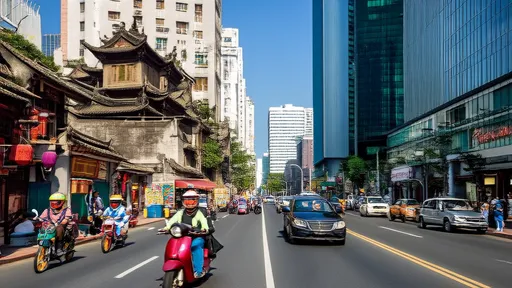
And yet, to define Phnom Penh solely by its trauma would be a grave injustice. From the ashes of that era, a new city has risen with defiant energy. The riverfront is now a sprawling promenade, Sisowath Quay, buzzing with trendy cafes, international restaurants, and bars that spill onto the pavement. Young Cambodians on sleek motorbikes weave through traffic, smartphones in hand, their laughter echoing against the backdrop of colonial-era buildings. The city's skyline, once low and subdued, is now punctuated by cranes and the gleaming glass of new high-rises and commercial centers, symbols of foreign investment and economic ambition.


This economic development is palpable. New shopping malls offer a world of consumer luxury, a stark contrast to the deprivation of a generation ago. The roar of construction is a constant soundtrack, building not just offices and condos but a new future. This rapid change brings a palpable sense of optimism, a collective forward momentum driven by a youthful population eager to connect with the global economy. There is a hunger for progress, a desire to claim a place on the world stage that is entirely separate from the narratives of war and genocide.


But this progress is not without its complexities and tensions. The breakneck pace of development often feels uneven, creating a city of stark juxtapositions. A gleaming Lexus might speed past a traditional wooden house on stilts. A homeless child might sleep in the shadow of a five-star hotel. The gap between the wealthy and the poor is visible and widening, a common story in booming Asian capitals, but one that feels particularly acute here given the collective suffering everyone's ancestors endured. The quest for modernization threatens to erase parts of the city's architectural heritage and communal spaces, leading to debates about what exactly is being built, and for whom.


This duality—the coexistence of memory and ambition—creates a unique and sometimes disorienting urban experience. One can stand before the majestic Royal Palace, with its glittering Silver Pagoda, a site of serene spiritual and historical continuity, and hear the faint echo of loudspeakers from a political rally or a commercial megaphone. One can enjoy a sophisticated dinner in a converted colonial villa, only to later pass a street altar where families light incense for lost loved ones. The past is not buried; it is acknowledged, remembered, and woven into the daily act of moving forward.


The spiritual life of the city provides a crucial bridge between these two worlds. The gentle chimes from countless Buddhist temples (wats) provide a constant, soothing soundtrack to the urban chaos. These temples are not merely tourist attractions; they are active centers of community, healing, and remembrance. Monks in saffron robes walk peacefully alongside businessmen in suits. For a population that suffered immensely under the anti-religious Khmer Rouge, the revival of these practices is a powerful act of reclamation and healing. It is a way to honor those who were lost while seeking peace and merit for the living.


Perhaps the most powerful symbol of this negotiation between past and future is the people themselves. The older generation, those who survived the horrors, often carry a quiet stoicism. Their stories, when shared, are gifts of immense trust and pain. The younger generation, who know the history only through stories, museums, and the silent grief of their parents, are tasked with building a new Cambodia. They navigate a world of global culture and economic opportunity while bearing the responsibility of this inherited memory. They are the living link, embodying both the resilience born of suffering and the hope born of possibility.


Phnom Penh, therefore, refuses to be simple. It is a city that demands to be understood in its full complexity. It is a place of mourning and of celebration, of ancient tradition and hyper-modernity. The Killing Fields are not a separate entity from the bustling markets or sparkling towers; they are part of the same story. The challenge for Phnom Penh, and for Cambodia as a whole, is to continue its ambitious development without forgetting the soil from which it grows—soil that is, tragically and undeniably, fertilized by the bones of its past. To visit is to witness this difficult, ongoing, and profoundly human balancing act.


Recommend Posts
Travel

Hanoi vs Ho Chi Minh City: A Debate on the Soul of Vietnam's North and South

By /Sep 3, 2025

In the heart of Southeast Asia, Vietnam pulses with a rhythm split between two urban giants: Hanoi in the north and Ho Chi Minh City in the south. These cities, both vibrant and steeped in history, represent more than just geographical capitals; they embody a profound cultural and ideological duality that continues to shape the nation’s identity. The narrative of their rivalry is not merely about urban competition but a deeper, more resonant story of Vietnam’s soul, caught between tradition and transformation, past and future.
Travel

Denpasar, the Cultural Heart and Birthplace of Art in Bali

By /Sep 3, 2025

Nestled amidst the tropical allure of Bali, Denpasar stands as a stark and vibrant contrast to the island's famed beaches and resort life. This is not a city of mere transit or casual tourism; it is the authentic, beating heart of Balinese culture, a sprawling, chaotic, and utterly captivating urban center where ancient traditions are not preserved behind glass but are lived, breathed, and constantly reinvented on the bustling streets. To understand Bali beyond the postcard imagery, one must venture into Denpasar's labyrinthine alleys, where the scent of frangipani and incense mingles with the exhaust of a thousand motorbikes, and where the rhythmic cadence of gamelan music provides the soundtrack to daily life.
Travel

Manila: The Insomniac's Frenzy and Romance of Asia's New York"

By /Sep 3, 2025

As dusk descends upon Manila Bay, painting the sky in hues of burnt orange and violet, the city begins its metamorphosis. The languid pace of the tropical afternoon gives way to a pulsating energy that courses through the streets like an electric current. This is when Manila truly awakens, transforming into what locals proudly call Asia's New York - a metropolis that never sleeps, where every corner holds the promise of adventure and every moment thrums with life.
Travel

Vientiane, the World's Slowest Capital, Lazy Times by the Mekong River"

By /Sep 3, 2025

Nestled along the banks of the mighty Mekong River, Vientiane stands as a testament to a different rhythm of life—one that moves not to the frenetic pulse of global capitals but to the gentle, unhurried cadence of its own history and culture. As the world rushes by, this city of temples, tree-lined boulevards, and timeless traditions invites visitors to slow down, breathe deeply, and immerse themselves in what many call the world’s slowest capital.
Travel

Yangon: The Glimmer of the Shwedagon Pagoda Converses with the Vicissitudes of Colonial Architecture

By /Sep 3, 2025

In the heart of Yangon, where the tropical sun casts long shadows and the air hums with the rhythm of a city both ancient and evolving, two architectural narratives stand in silent, profound dialogue. One speaks of divinity, eternity, and the unwavering faith of a people—the shimmering, golden pinnacle of the Shwedagon Pagoda. The other whispers of a complex, colonial past, its grand but weary facades telling tales of empire, trade, and the indelible marks of foreign rule. This is not a story of opposition, but rather a nuanced conversation between the sacred and the secular, the eternal and the ephemeral, played out in brick, gold, and stone.
Travel

Navigating Through the Congestion and Vitality of Jakarta, Southeast Asia's Largest Metropolis

By /Sep 3, 2025

In the heart of Southeast Asia lies Jakarta, a sprawling metropolis where the relentless pulse of urban life meets the suffocating grip of gridlock. The city breathes in a rhythm dictated by its traffic, a chaotic symphony of honking horns, revving engines, and the collective sigh of millions on the move. To navigate Jakarta is to understand a paradox: a place of immense energy and frustrating stagnation, where the very congestion that defines its streets also fuels its undeniable vitality.
Travel

Contemplating the History of Killing Fields and the Thriving Reality in Phnom Penh

By /Sep 3, 2025

Phnom Penh stands today as a city of profound contrasts, a place where the whispers of a traumatic past coexist, often uneasily, with the vibrant hum of a rapidly modernizing present. To walk its streets is to navigate a living palimpsest, where layers of history, both brutal and beautiful, are constantly being written and rewritten. The very air feels thick with memory, a silent testament to a resilience that defines the Cambodian spirit. This is not merely a capital city; it is a symbol of survival, a complex narrative of pain and progress unfolding in real time.
Travel

Melting Pot of Cultures under the Night Sky of Kuala Lumpur's Twin Towers"

By /Sep 3, 2025

As dusk descends upon Kuala Lumpur, the Petronas Twin Towers begin their nightly transformation. What was by day a marvel of modern engineering and soaring ambition becomes by night something else entirely—a luminous beacon at the heart of a living, breathing cultural mosaic. The towers, in their radiant glow, do not stand as a monument to isolation but as a central stage for a profound and ongoing human story. This is not merely a spectacle of light and architecture; it is the pulsating core of a multicultural nexus, a place where the concept of a global village ceases to be an abstract ideal and becomes a tangible, nightly reality.
Travel

Bangkok: From Sacred Temples to Wild Night Markets - A Tale of Two Cities

By /Sep 3, 2025

Bangkok is a city of mesmerizing contrasts, a place where the sacred and the profane exist not just side by side, but deeply intertwined. To walk its streets is to experience a sensory and spiritual journey that oscillates between profound tranquility and exhilarating chaos. It is a metropolis that defies simple definition, a place where the scent of incense and street food, the sound of chanting and commerce, and the sights of golden spires and neon lights create a unique, unforgettable tapestry.
Travel

Singapore Marina Bay: A Futuristic City's Enchanted Forest and Sky Pool

By /Sep 3, 2025

Singapore's Marina Bay stands as a testament to human ingenuity and the relentless pursuit of merging nature with groundbreaking urban design. This iconic district, once a tranquil body of water, has been transformed into a shimmering jewel of Southeast Asia, where futuristic architecture dances harmoniously with lush greenery. It is a place where the line between the built environment and the natural world beautifully blurs, creating an experience that feels both incredibly advanced and soothingly organic. Visitors and residents alike are treated to a spectacle of innovation, a living blueprint for what the sustainable, awe-inspiring cities of tomorrow could aspire to be.
Travel

Trekking Through Untouched Jungles and Coastlines in Tanintharyi Region, Myanmar

By /Sep 3, 2025

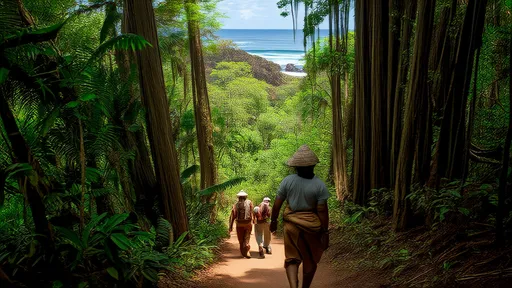
In the southernmost reaches of Myanmar, where the land frays into a labyrinth of emerald and azure, lies Tanintharyi Division—a sliver of wilderness that remains one of Southeast Asia’s last great frontiers. Stretching from the Andaman Sea to the Thai border, this region is a tapestry of primordial rainforest, jagged limestone karsts, and untouched coastlines. To venture here is to step into a world untamed by mass tourism, where the rhythm of life is still dictated by monsoon winds, tidal whispers, and the calls of rare wildlife. This is not a destination for the faint of heart; it is a pilgrimage for those who seek raw, untethered adventure.
Travel

Diving in East Timor: Experience the Primitive Charm of Asia's Youngest Nation

By /Sep 3, 2025

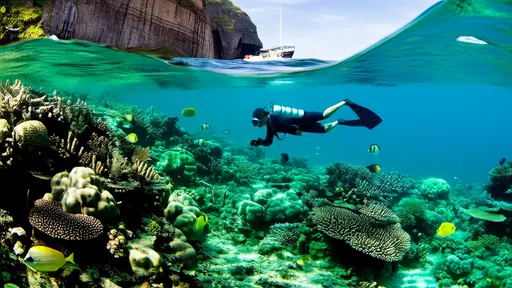
Nestled at the eastern edge of the Indonesian archipelago, Timor-Leste emerges as Asia's youngest nation, not just in years but in the raw, untamed beauty that defines its shores. While its struggle for independence and subsequent nation-building have captured global attention, it is beneath the waves along its coastline that an even more profound story unfolds—one of pristine reefs, staggering biodiversity, and dive sites so untouched they feel like a secret the ocean has fiercely guarded. For those willing to venture off the beaten path, Timor-Leste offers a rare and thrilling opportunity: raw, unfiltered diving in an arena where nature still reigns supreme.
Travel

Brunei Ulu Temburong National Park: Rainforest Canopy Walk and Proboscis Monkeys

By /Sep 3, 2025

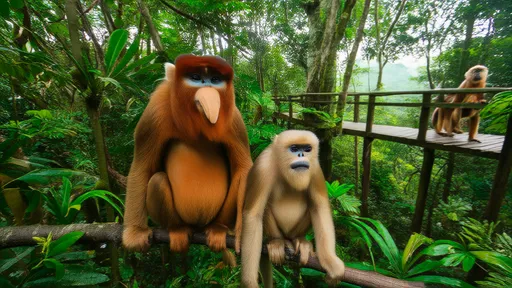
Nestled within the heart of Borneo, the Ulu Temburong National Park in Brunei stands as a pristine testament to nature's grandeur. This protected expanse of lush rainforest, often referred to as the "Green Jewel of Brunei," offers an unparalleled glimpse into one of the world's oldest and most biodiverse ecosystems. For the intrepid traveler and the devoted naturalist alike, it presents a rare opportunity to disconnect from the modern world and immerse oneself in an environment that has thrived for millions of years. The air is thick with the symphony of life—the distant calls of exotic birds, the rustle of leaves from unseen creatures, and the constant, gentle hum of the jungle.
Travel

Raja Ampat, Indonesia: The Ultimate Mecca" of Diving

By /Sep 3, 2025

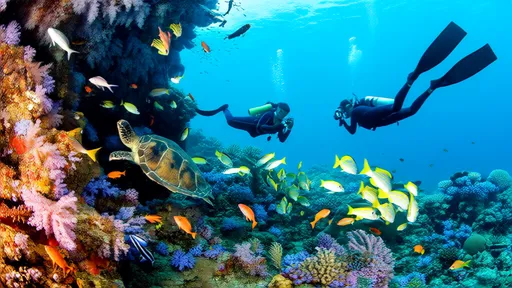
Nestled in the heart of the Coral Triangle, Raja Ampat is a name whispered with reverence among divers, marine biologists, and intrepid travelers. This remote archipelago, located off the northwest tip of Indonesia's Papua province, is not merely a destination; it is a pilgrimage. It is the ultimate mecca for the diving world, a place where the very concept of underwater biodiversity is redefined and the term 'pristine' finds its truest meaning. The name itself, translating to 'Four Kings,' hints at the regal and otherworldly experience that awaits beneath its turquoise waves.
Travel

Boat Adventure into the World's Largest Cave in Phong Nha-Ke Bang National Park, Vietnam

By /Sep 3, 2025

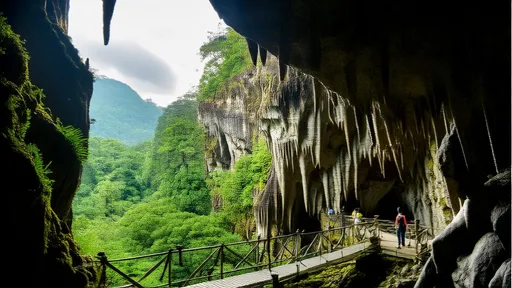
Deep in the heart of Vietnam’s Quang Binh province lies one of the planet’s last great wilderness frontiers—Phong Nha-Ke Bang National Park. A UNESCO World Heritage Site twice recognized for its geological significance and biodiversity, this sprawling protected area is a realm of primordial jungles, jagged limestone karsts, and a vast, mysterious network of subterranean passages. But it is home to one cavern so immense, so otherworldly, that it has redefined our very understanding of what a cave can be: Hang Son Doong, the largest cave in the world.
Travel

Tubing Adventure in the Karst Mountains of Vang Vieng, Laos

By /Sep 3, 2025

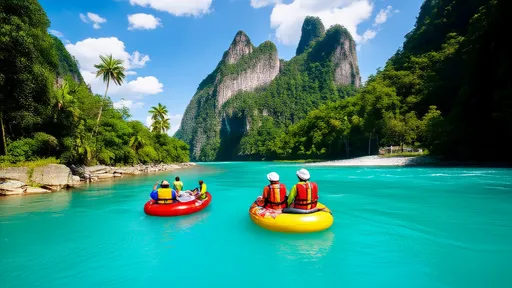
Nestled in the heart of Laos, Vang Vieng is a destination that has transformed from a backpacker's party hub into a haven for nature lovers and adventure seekers. Among its many attractions, the tubing experience through the karst cave systems stands out as a unique blend of thrill and natural wonder. This activity allows visitors to float along the serene Nam Song River, surrounded by dramatic limestone cliffs, and explore mystical caves that have been carved out over millennia. It’s an adventure that combines relaxation with exploration, offering a glimpse into the geological and cultural richness of the region.
Travel

Siargao, Philippines: A Surfing Paradise and Coconut Groves for Beginners

By /Sep 3, 2025

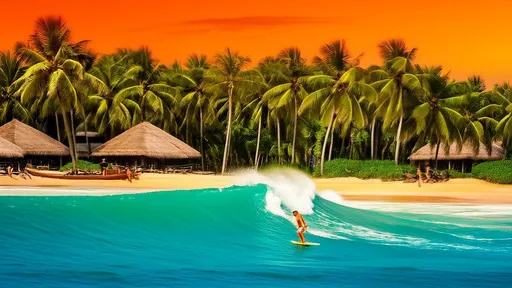
Nestled in the heart of the Philippine archipelago lies Siargao, an island that has steadily captured the imagination of travelers seeking both adventure and tranquility. Known globally as the surfing capital of the Philippines, its reputation is built upon the legendary Cloud 9 break, a wave that challenges seasoned surfers and draws spectators from around the world. Yet, beyond the thrill of the barrels and the international surfing competitions, Siargao reveals itself as an idyllic haven for beginners—a place where the ocean is both a teacher and a gentle host. The island does not merely offer waves; it offers an initiation into a lifestyle where the rhythm of the sea syncs with the pulse of life, making it, for many, a true paradise for those first learning to ride the swells.
Travel

Encountering Wildlife in Khao Yai National Park, Bangkok's Backyard

By /Sep 3, 2025

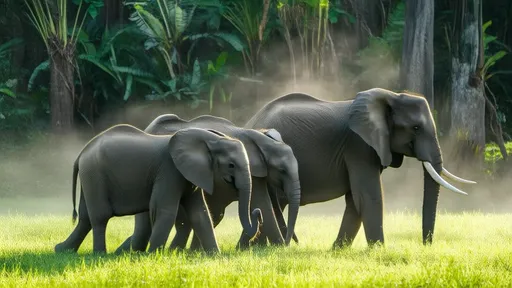
Nestled just a few hours’ drive northeast of Bangkok’s bustling streets lies Khao Yai National Park, a sprawling sanctuary where wilderness thrives in dramatic contrast to the urban energy of Thailand’s capital. Often referred to as Bangkok’s backyard jungle, this UNESCO World Heritage Site offers a breathtaking escape into one of Southeast Asia’s most cherished natural landscapes. It is a place where the morning mist clings to ancient trees, the calls of gibbons echo through dense canopies, and the possibility of an encounter with wild elephants adds a palpable thrill to every trail.
Travel

Mount Bromo in Indonesia: Witnessing an Apocalyptic Sunrise at the Gateway to Earth"

By /Sep 3, 2025

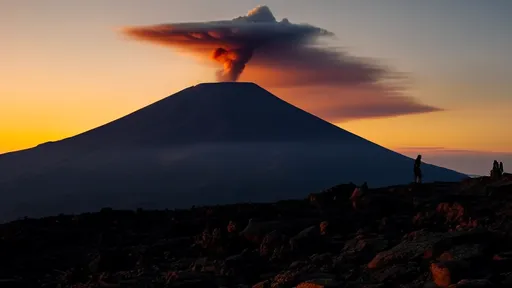
In the heart of East Java, Indonesia, where the earth whispers ancient secrets and the sky dances with fire, lies Mount Bromo—a place where travelers don’t just witness sunrise; they stand at the threshold of eternity. Known among adventurers as the "Gateway to Earth," this active volcano offers a spectacle so surreal, so hauntingly beautiful, that it feels less like a dawn and more like an apocalypse painted in gold and shadow.
Travel

Exploring the World's Largest Cave Corridor at Mulu National Park, Malaysia

By /Sep 3, 2025

Deep within the heart of Borneo, cloaked in the emerald embrace of ancient rainforests, lies a realm of subterranean grandeur that defies imagination. Gunung Mulu National Park in Sarawak, Malaysia, is home to one of the planet's most spectacular geological wonders: the world's largest cave passage. This is not merely a destination for intrepid explorers and scientific researchers; it is a cathedral of natural history, a silent testament to the immense power of water and time that has been sculpting the landscape for millions of years.