Deep within the heart of Borneo, cloaked in the emerald embrace of ancient rainforests, lies a realm of subterranean grandeur that defies imagination. Gunung Mulu National Park in Sarawak, Malaysia, is home to one of the planet's most spectacular geological wonders: the world's largest cave passage. This is not merely a destination for intrepid explorers and scientific researchers; it is a cathedral of natural history, a silent testament to the immense power of water and time that has been sculpting the landscape for millions of years.
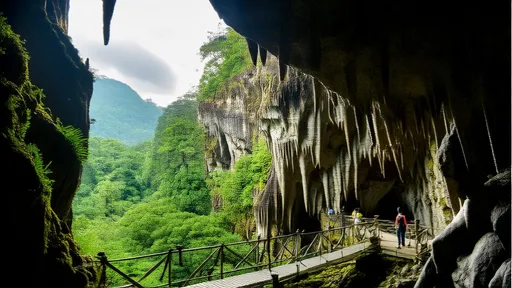
The star of this incredible karst landscape is the Deer Cave, or Gua Rusa, which holds the official title for the planet's largest cave passage. To stand at its entrance is to feel a profound sense of awe and insignificance. The main entrance yawns open, a gaping mouth in the side of the mountain large enough to accommodate several jumbo jets stacked atop one another. The sheer scale is disorienting; the human form is dwarfed into nothingness against the towering walls and the distant, shadowy ceiling. The statistics are staggering: the passage stretches for over two kilometers, with sections reaching 220 meters in width and arching to a height of 120 meters. These are not just numbers on a page; they represent a void of epic proportions, a space so vast it has developed its own unique weather systems.
Venturing inside is like stepping onto another world. The air is thick, heavy with the distinct, pungent aroma of ammonia and life. This smell is the signature of the cave's most famous residents: millions of free-tailed bats and wrinkle-lipped bats. They cling to the ceiling in seething, dark masses during the day, a living, breathing entity that coats the rock. As daylight begins to wane, a miraculous event unfolds. The bats stir, and a few pioneers spiral out from the cave's mouth. This trickle soon becomes a river, then a torrent, as millions of bats erupt from the cave in a continuous, swirling vortex that darkens the twilight sky. This exodus, a desperate hunt for insects, can last for over an hour, a breathtaking natural phenomenon that plays out like a dark symphony against the fading light. This daily performance is a crucial ecological process, with the bats providing a vital pest control service for the surrounding rainforests.
But the cave's ecosystem is built from the bottom up, and it begins with the bats. The cave floor is carpeted in a deep, soft layer of guano, accumulated over millennia. This nutrient-rich waste sustains a whole menagerie of specialized troglobites—creatures that have adapted to a permanent life in darkness. From cockroaches and millipedes that process the waste to fierce-looking cave snakes that prey upon them, this entire food web is powered by the bats above. It is a self-contained world of constant drizzle from the high ceiling, a result of the humidity from the breath and bodies of millions of mammals condensing against the cooler rock. This creates a surreal, ethereal atmosphere, with misty shafts of light piercing the darkness from collapsed sections of the ceiling known as dolines.
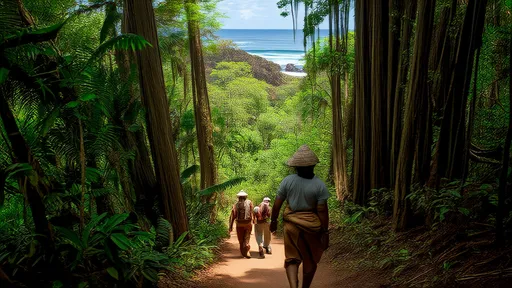
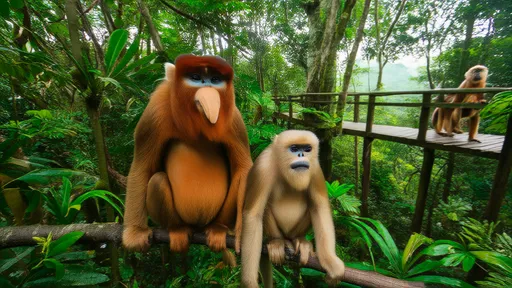
The journey to the Deer Cave is an adventure in itself. Accessible only by boat and then by foot, the approach is through the stunningly beautiful and pristine rainforest of the national park. The walk to the cave entrance is along a raised boardwalk that meanders through lush jungle, alive with the calls of gibbons and the chatter of exotic birds. This serves as a perfect prelude, building anticipation and reinforcing the sense of entering a truly wild and protected place. The park is a UNESCO World Heritage Site, a status that recognizes both its incredible geological significance and its immense value as a biodiversity hotspot. The protection ensures that this fragile environment remains untouched by development, preserving its majesty for future generations.
While the Deer Cave is the undeniable headline act, it is merely one movement in a much larger symphony of stone. Mulu is a labyrinthine network of caves, each with its own character and record-breaking features. Clearwater Cave boasts one of the world's longest underground rivers, while the Sarawak Chamber, located in a different part of the park, is the largest enclosed space on Earth by area. Exploring these caves requires different levels of expertise, from gentle walks to serious spelunking adventures that involve mud, ropes, and squeezing through narrow passages. Together, they form the most extensive and spectacular cave system on the planet.
For the visitor, the experience is transformative. It is a powerful reminder of the raw, untamed forces that shape our world, often hidden from view. It challenges our perception of scale and highlights the incredible, often bizarre, ways life adapts to the most extreme environments. The Deer Cave is more than a record-holder; it is a natural wonder that inspires a deep sense of respect and wonder. It stands as a monumental piece of Earth's history, a hidden corridor of immense beauty and power, waiting in the silent darkness of the Bornean jungle.

By /Sep 3, 2025

By /Sep 3, 2025

By /Sep 3, 2025

By /Sep 3, 2025

By /Sep 3, 2025

By /Sep 3, 2025

By /Sep 3, 2025

By /Sep 3, 2025

By /Sep 3, 2025

By /Sep 3, 2025
By /Sep 3, 2025
By /Sep 3, 2025
By /Sep 3, 2025

By /Sep 3, 2025

By /Sep 3, 2025
By /Sep 3, 2025

By /Sep 3, 2025
By /Sep 3, 2025
By /Sep 3, 2025
By /Sep 3, 2025
