Deep in the heart of Vietnam’s Quang Binh province lies one of the planet’s last great wilderness frontiers—Phong Nha-Ke Bang National Park. A UNESCO World Heritage Site twice recognized for its geological significance and biodiversity, this sprawling protected area is a realm of primordial jungles, jagged limestone karsts, and a vast, mysterious network of subterranean passages. But it is home to one cavern so immense, so otherworldly, that it has redefined our very understanding of what a cave can be: Hang Son Doong, the largest cave in the world.
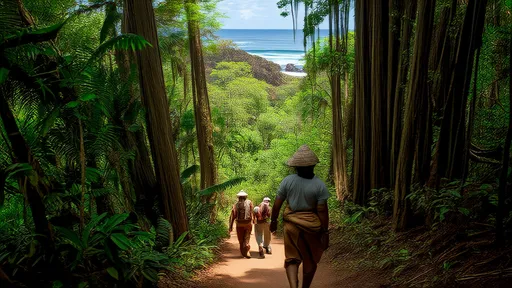
The journey to even reach the threshold of Son Doong is an expedition in itself. It begins with a flight to the central coastal city of Dong Hoi, followed by a long, bumpy overland transfer into the remote jungle. From a small staging point, adventurers trek for hours through dense, humid rainforest, across rushing rivers, and past other magnificent caves like Hang En, which itself is large enough to contain a skyscraper. This arduous approach serves as a fitting prelude, a gradual stripping away of the modern world before one stands at the mouth of the earth’s greatest void.
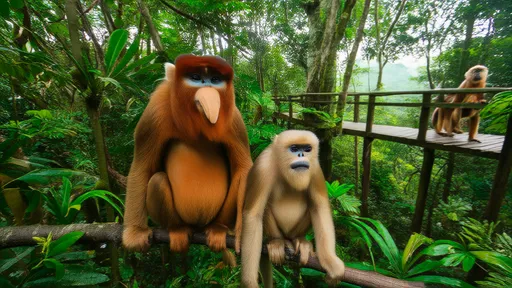
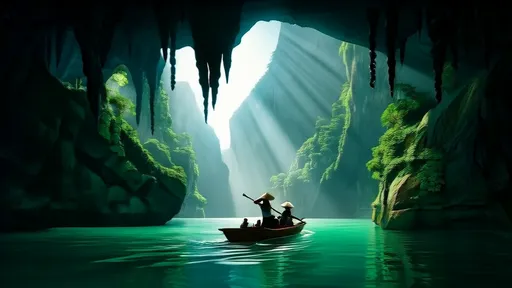
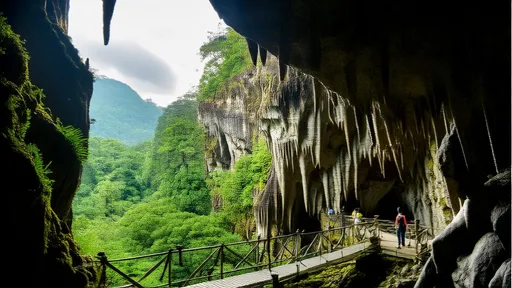
And then, you enter. The scale of Hang Son Doong is not merely impressive; it is utterly incomprehensible until witnessed firsthand. The main cavern is so vast that it has its own localized weather system. Clouds form near its ceiling, and mist often shrouds its gargantuan formations. Sections of the ceiling have collapsed over millennia, creating enormous openings called dolines that allow sunlight to pour in, nurturing two dense, verdant jungles within the cave itself. Explorers rappel down into these internal ecosystems, where monkeys chatter in the trees and insects hum in the humid air—a surreal experience of being in a jungle, yet entirely underground.
The sheer statistics of Son Doong are staggering. It is over 5 kilometers long, with sections reaching 200 meters in height and 150 meters wide. Its largest chamber could comfortably house an entire New York City block of 40-story buildings. Within this cathedral-like space, one feels a profound sense of insignificance. Towering stalagmites, some over 70 meters tall, rise from the floor like petrified giants. The "Great Wall of Vietnam," a daunting 90-meter-high calcite barrier, stands as a formidable challenge for explorers traversing the cave’s length.
This natural wonder remained hidden from the world until 1991, when a local man, Ho Khanh, first stumbled upon the entrance while seeking shelter from a storm. The dense jungle and the formidable descent into the entrance kept it secret. Its significance wasn’t realized until 2009, when a team from the British Cave Research Association, led by Howard and Deb Limbert, followed Ho Khanh’s directions and officially surveyed it, declaring it the world’s largest by volume. The name they gave it, Hang Son Doong, translates to "Mountain River Cave," derived from the powerful river that roars through its passages during the rainy season.
Access to Hang Son Doong is fiercely protected and limited to a single licensed tour operator, ensuring that its fragile ecosystem remains pristine. Only a few hundred permits are issued each year for the multi-day expedition, which involves camping on sandy banks inside the cave’s enormous chambers. There is no electricity, no connectivity, just the deep, resonant silence of the earth broken by the drip of water and the distant flow of the subterranean river. At night, the blackness is absolute, a darkness so deep it feels physical, making the starry skies visible through the dolines during the day seem like a distant memory.
Beyond the awe-inspiring geology, the cave is a living museum. Scientists have discovered new species of fish, spiders, and white crickets within its confines, all perfectly adapted to the perpetual darkness. Pearls the size of baseballs, formed by dripping water over centuries, lie embedded in stone pools. Every surface tells a story millions of years in the making, from the delicate soda straw stalactites to the massive, flowing formations that resemble frozen waterfalls.
The expedition to Son Doong is more than a tour; it is a physical and mental pilgrimage. It demands a high level of fitness, a spirit of adventure, and a willingness to embrace the raw, untamed power of nature. It is not for the faint of heart. The journey involves technical climbs, river crossings, and navigating challenging terrain. But the reward is an experience that exists almost outside of time—a chance to walk through a landscape that feels more like another planet than our own.
For those who undertake it, the voyage into Hang Son Doong is transformative. It is a stark reminder of how much of our world remains unexplored, holding secrets and wonders beyond our imagination. In an era of constant connectivity and urbanization, Son Doong stands as a majestic, humbling monument to the power and mystery of the natural world, a hidden kingdom waiting deep within the Vietnamese jungle.
By /Sep 3, 2025
By /Sep 3, 2025

By /Sep 3, 2025
By /Sep 3, 2025
By /Sep 3, 2025
By /Sep 3, 2025
By /Sep 3, 2025
By /Sep 3, 2025
By /Sep 3, 2025
By /Sep 3, 2025
By /Sep 3, 2025
By /Sep 3, 2025
By /Sep 3, 2025
By /Sep 3, 2025
By /Sep 3, 2025
By /Sep 3, 2025
By /Sep 3, 2025
By /Sep 3, 2025
By /Sep 3, 2025
By /Sep 3, 2025
