Nestled at the eastern edge of the Indonesian archipelago, Timor-Leste emerges as Asia's youngest nation, not just in years but in the raw, untamed beauty that defines its shores. While its struggle for independence and subsequent nation-building have captured global attention, it is beneath the waves along its coastline that an even more profound story unfolds—one of pristine reefs, staggering biodiversity, and dive sites so untouched they feel like a secret the ocean has fiercely guarded. For those willing to venture off the beaten path, Timor-Leste offers a rare and thrilling opportunity: raw, unfiltered diving in an arena where nature still reigns supreme.
The journey to dive here is an adventure in itself. Unlike the well-trodden dive hubs of Southeast Asia, Timor-Leste’s infrastructure remains modest, a characteristic that inherently preserves its marine environments. The capital, Dili, serves as the primary gateway, a charmingly chaotic city where the scent of saltwater mingles with the vibrant energy of a nation finding its feet. From here, divers embark on journeys along rugged coastal roads, past traditional villages and terraced hillsides, to access sites that are often mere steps from the shore. This accessibility is a hallmark of Timorese diving; many of its most spectacular reefs are just a fin-kick away from empty beaches, requiring no boats and thus offering a sense of solitude and connection that is increasingly rare.
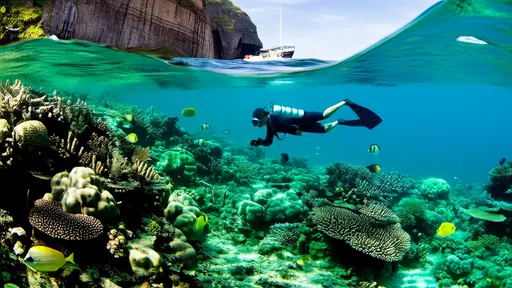
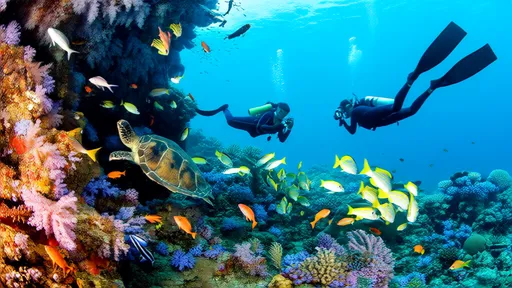
Atauro Island, a mountainous sliver of land visible from Dili across the deep Wetar Strait, is undoubtedly the crown jewel of Timorese diving. The strait itself, plunging to depths of over 3,000 meters, acts as a powerful conveyor belt of nutrient-rich currents, fueling an explosion of marine life that has garnered scientific acclaim. Recent surveys have recorded some of the highest reef fish biodiversity on the planet in these very waters. Diving here is an intense sensory experience. Schools of trevally and barracuda form shifting silver walls, while hawksbill and green turtles glide gracefully past bommies blanketed in soft corals and sea fans. The currents can be strong, dictating the rhythm of the dive, but they are the very life force that brings the reef to a fever pitch of activity, attracting larger pelagics like whales and dolphins that are frequently spotted from the surface.
But the allure extends beyond the famous Atauro. The mainland coastline is punctuated by dramatic drop-offs, hidden caves, and sprawling seagrass meadows. Secret Garden, a site near Dili, is a stunning example—a shallow coral plateau teeming with macro life, from flamboyant nudibranchs and cryptic frogfish to colonies of garden eels swaying in the sandy patches. Further east, the remote Jaco Island, a sacred and uninhabited paradise, is surrounded by waters so clear and reefs so pristine they are often described as ethereal. The Timorese people’s deep cultural respect for the land, or Tara Bandu, which includes traditional laws protecting marine areas, has been instrumental in safeguarding these ecosystems, creating a beautiful synergy between cultural heritage and conservation.
What truly defines the diving in Timor-Leste is its raw, uncommercialized character. There are no crowded dive boats jostling for position, no queues of snorkelers on the surface. Instead, it’s just you and the ocean. This rawness demands a certain level of self-sufficiency and respect from divers. The conditions are dynamic, the sites are often unmarked, and the sense of exploration is palpable. It feels less like a packaged tourist activity and more like genuine discovery. This is not diving on a curated path; it is diving at the frontier.
Of course, this pristine state is fragile. Timor-Leste stands at a crossroads, with development pressures looming. However, this very newness offers a unique chance. The nation has the opportunity to learn from the mistakes of others and build a sustainable, community-led tourism model from the ground up. Many of the local dive operators are passionately involved in conservation initiatives, from coral restoration projects to citizen science programs inviting divers to contribute to marine data collection. Choosing to dive here, therefore, becomes more than a holiday; it becomes a conscious act of supporting a nascent ecotourism economy that values its natural treasures.
To dive in Timor-Leste is to witness the ocean in its most powerful and unvarnished state. It is to feel the thrill of the unknown and the humility of exploring a world that operates entirely on its own terms. It’s for the diver who seeks not just coral and fish, but a true adventure—a story to tell not of perfect resort logistics, but of breathtaking encounters in a place where the wild still very much rules. In the clear, current-swept waters of Asia’s youngest nation, you don’t just observe marine life; you experience the pulse of a living, breathing ocean.

By /Sep 3, 2025
By /Sep 3, 2025

By /Sep 3, 2025
By /Sep 3, 2025
By /Sep 3, 2025
By /Sep 3, 2025

By /Sep 3, 2025

By /Sep 3, 2025
By /Sep 3, 2025
By /Sep 3, 2025
By /Sep 3, 2025
By /Sep 3, 2025

By /Sep 3, 2025
By /Sep 3, 2025

By /Sep 3, 2025
By /Sep 3, 2025
By /Sep 3, 2025
By /Sep 3, 2025
By /Sep 3, 2025
By /Sep 3, 2025
